Virulence disarming and functional reprogramming
Disarming a Pathogen, Adding a Function
Bacterial CRISPR-Transposase Reduction of Virulence In Situ
Preclinical proof of concept in a murine infection model
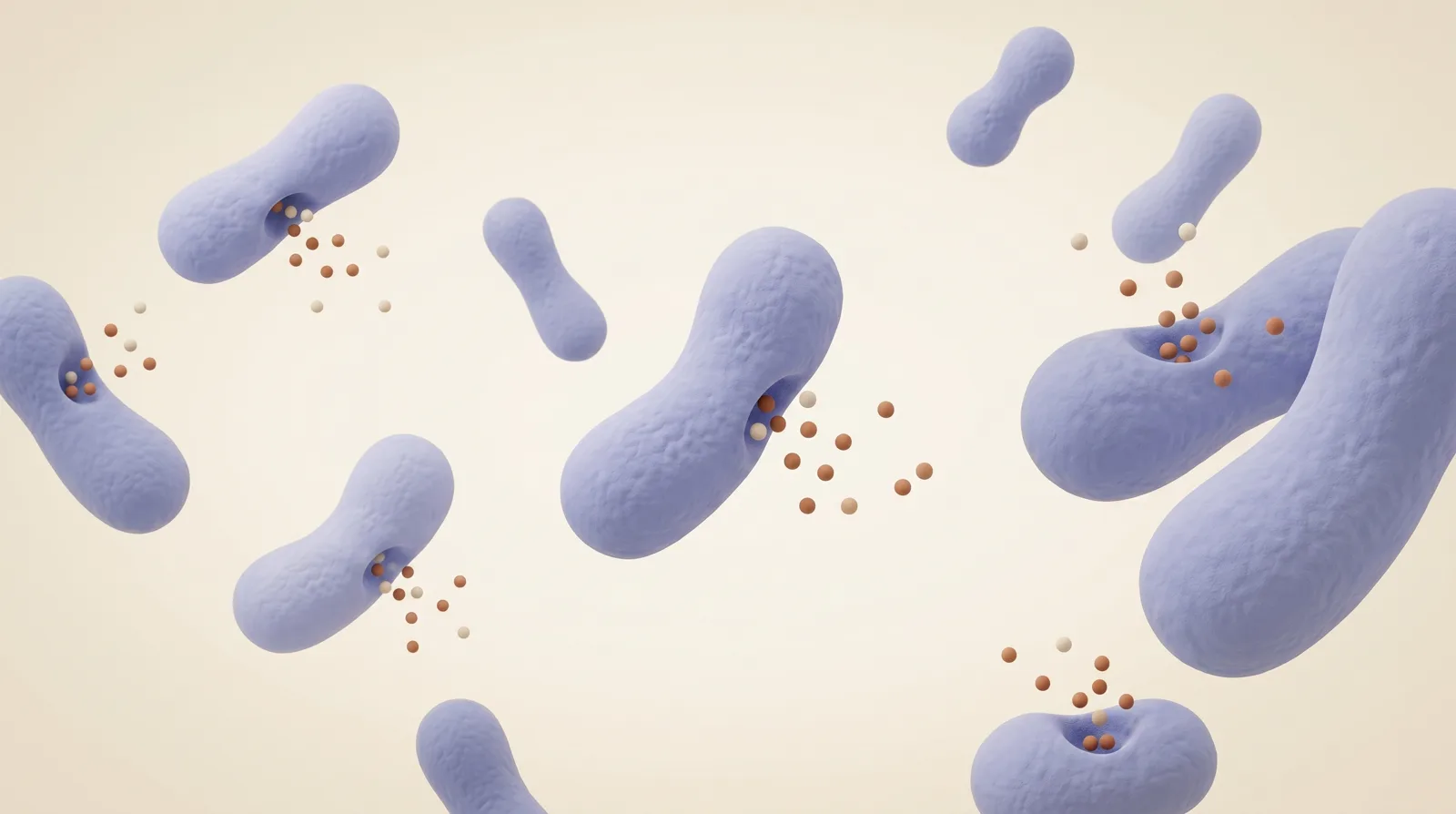
BACTRINS (Bacterial CRISPR-Transposase Reduction of Virulence In Situ) uses conjugation-mediated delivery of CRISPR-associated transposases for RNA-guided genomic integration. The system combines site-specific inactivation of Shiga toxin genes with insertion of a nanobody payload designed to disrupt pathogen attachment.
In a murine infection model of a Shiga toxin-producing pathogen, a single dose produced high-efficiency Shiga toxin gene inactivation and improved survival. These results establish a preclinical proof of concept for changing a disease-relevant bacterial function in situ.
How It Works
CRISPR-associated transposases inactivate virulence-associated loci, such as Shiga toxin genes, while inserting DNA encoding a new function, such as an attachment-blocking nanobody.
Applications
High-efficiency Shiga toxin gene inactivation and improved survival in a murine infection model.
Biotherapeutic Development
Develop delivery systems and live biotherapeutic strategies.
Published methods in this area
- BACTRINSDisarms pathogen virulence in place while inserting a therapeutic payload.Ronda et al. · Nature Biomedical Engineering · 2025
- GLP-1 probioticRaises GLP-1 locally in the gut to restore barrier function and ease colitis in a mouse model.Brockmann, Ronda et al. · Science Advances · 2025
Related Technologies
Metagenomic Alteration of Gut Microbiome by In Situ Conjugation (MAGIC)
MAGIC uses bacterial conjugation to deliver genetic cargo from engineered donors to resident gut bacteria. Co-developed by Carlotta Ronda and collaborators, the 2019 study demonstrated genetic modification of diverse bacteria in the mouse gut.
RNA-Guided DNA Insertion
INTEGRATE uses guide RNAs and CRISPR-associated transposases to insert DNA at selected bacterial genomic sites. In 2021, Carlotta Ronda and collaborators improved the system for efficient, multiplexed insertion of large genetic payloads.
Precision Editing in Living Communities
MetaEdit combines conjugative delivery with computationally designed guide RNAs to insert DNA into selected bacteria within microbial communities. Co-developed at Columbia and published in 2025, the platform demonstrated targeted modification of native gut bacteria in mice.